The Burj Al Arab was never described as a seven-star hotel by any official rating body. There is no official seven-star rating system. The "seven stars" designation emerged organically from a press description in 1999, was never corrected, and has persisted for over two decades because it is, in the specific sense of identifying something beyond the reach of conventional assessment, accurate. The hotel has 202 suites — no standard rooms; every room is a duplex suite — and a level of service that suggests the staff has been briefed on your preferences before you've articulated them.
The Address
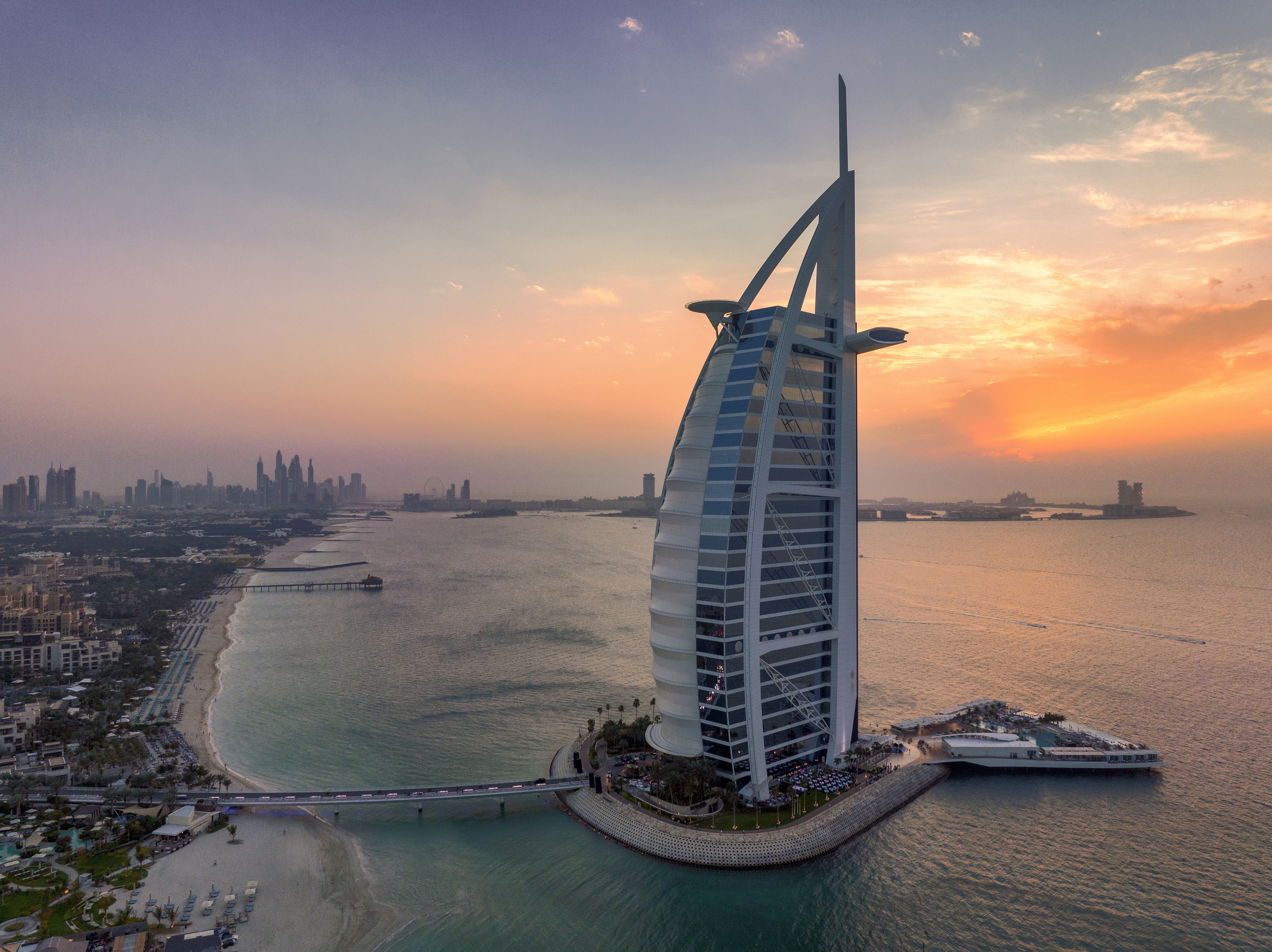
The Burj Al Arab stands on an artificial island 280 metres offshore in the Arabian Gulf, connected to the mainland of Jumeirah Beach by a private bridge. The bridge is controlled access: you do not arrive at the Burj Al Arab unannounced. You are met at the checkpoint by the hotel's Rolls-Royce fleet (Gold, naturally) and transported the final distance with a precision that communicates, clearly, that the experience has begun. The building itself — 321 metres tall, shaped like the sail of a traditional Arabian dhow — is the most recognisable hotel architecture in the world. It is visible from anywhere on the Dubai coastline.
The Suite
The Royal Suite occupies two full floors (25 and 26) of the hotel tower. It contains a cinema, two bedrooms, a dining room for twelve, a library, and a private terrace at an elevation that places it at cloud level during the periods when Dubai's atmosphere creates cloud. The butler team assigned to the Royal Suite is available around the clock and has, historically, sourced items for guests that no reasonable person would have expected a hotel to provide: live animals for an event, specific vintage cars for a beach drive, architectural models for a business presentation. The hotel does not publish the "cannot be done" list because, operationally, it is very short.
The Casino
The UAE prohibits casino gambling. This is not a limitation of the Burj Al Arab — it is the context of Dubai as a destination. The hotel's position in this guide is as a reminder that the casino aesthetic — the feeling of extraordinary access, of being in a room where money is no constraint, of service at a level that implies you are the most important person in the building — is not exclusively a casino phenomenon. The Burj Al Arab delivers it through other means: the Al Mahara restaurant (underwater, accessible via simulated submarine descent), the Skyview Bar (210 metres up), the gold-plated fixtures that are neither ostentatious nor apologetic. In a guide for people who know casinos, this is the hotel that proves the casino is sometimes beside the point.
“'Seven stars' is not a rating. It is a statement that no existing language adequately describes the experience.”
Getting There & Getting In
Dubai International Airport (DXB) is 25 minutes from the hotel by road; the hotel fleet can meet you on the airside of the terminal with prior arrangement through Jumeirah's concierge team. Private aviation arrives at Al Maktoum International (DWC), 45 minutes by road, or the hotel has a helipad for direct transfer from corporate helicopters. In-room dining operates from a menu that is not available publicly and changes with market availability. The hotel sommelier is available for in-suite wine service and has access to vintages unavailable in any Dubai restaurant. Request the Italian chef for private dinners; the experience is substantially above what the restaurant menus suggest is possible.
- →Book the Royal Suite or Panoramic Suite — standard Deluxe Suites are remarkable; these are beyond.
- →Request the helicopter arrival from Dubai airport — the approach over the Gulf is a meaningful introduction.
- →Pre-arrange private beach dining through the concierge: the beach setup at sunset is one of the finest experiences in the hotel.